The water heater is one of the most used appliances in any home, and when it fails, showers and washing stop at once. But most water heater faults do not mean buying a new heater. Many can be fixed by replacing one part, such as the heating element, the thermostat or the safety valve. Plumber Kuwait repairs all types of water heaters across Kuwait, and we diagnose the fault properly before recommending a repair or a replacement.
The most common water heater faults
The heater does not heat at all
The first thing we check is power: the breaker in the distribution board, the switch and the wiring. If the power is fine, the cause is usually a burnt-out heating element or a faulty thermostat. We test each part with a meter, so we replace only what has actually failed instead of changing parts by trial and error.
The water gets hot and then turns cold quickly
This has three common causes: a weak or partly burnt element, heavy limescale at the bottom of the tank that reduces its real capacity, or a heater that is simply too small for the household. We find the cause first, because the fix is different in each case.
Water leaking from the heater
If the leak comes from the connections, the flexible hose or the safety valve, the repair is simple and relatively cheap. If water is coming from the body of the tank itself, the tank is corroded inside, and replacement is the safe answer.
The heater trips the electricity
If the breaker trips every time the heater is switched on, there is usually a damaged element leaking current or moisture in the wiring. This must not be ignored because it is a safety issue. Switch the heater off until it has been checked.
Popping or rumbling sounds inside the heater
The noise usually comes from limescale at the bottom of the tank, where trapped water boils underneath it. Draining and flushing the tank often solves the problem and improves the heater’s efficiency.
Rusty or smelly hot water
Brown or rust-coloured water from the hot taps only points to corrosion inside the tank or a worn-out protective anode. Replacing the anode in time extends the life of the tank, but if corrosion is advanced, replacement is the better choice.
Low hot water pressure
If cold water is strong but hot water is weak, the cause may be limescale in the heater inlet or outlet, a half-closed valve, or a problem in the mixer itself. We check the whole route from the heater to the tap.
Faults specific to instant water heaters
Instant heaters only start heating when they detect water flowing through them. Their most common faults are water pressure too low to switch them on, a faulty flow sensor, a small inlet filter blocked with limescale, and a burnt heating element. If the water only comes out warm rather than hot, the heater’s capacity may be lower than the amount of water being used at the same time.
Faults in central water heaters
In villas that rely on one central heater for several bathrooms, the cause may lie outside the heater: a stopped circulation pump that makes hot water slow to reach distant bathrooms, a faulty mixing valve, or heat loss in long uninsulated pipes. That is why we check the whole network, not just the heater.
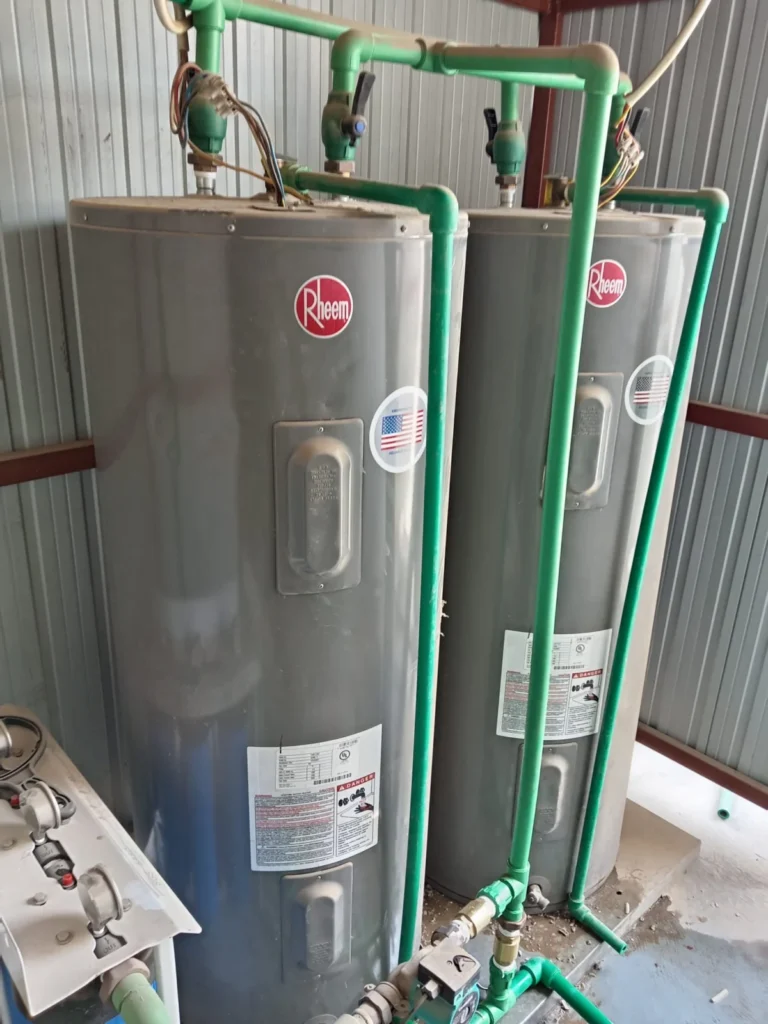
How we diagnose a water heater fault
- We switch off the power first and make sure it is safe before any inspection.
- We check the breaker, the wiring and the switch.
- We test the heating element and the thermostat with a meter.
- We check the safety valve, the connections and the tank body for leaks or corrosion.
- We explain the fault, the part needed and the price before starting the repair.
Parts we replace
- Heating element: the part that fails most often, especially with limescale.
- Thermostat: controls the temperature; a faulty one gives cold or very hot water.
- Safety valve: protects the tank from excess pressure and must never be blocked or removed.
- Anode: protects the tank body from corrosion.
- Indicator light and switch: show the heater’s status and make it easier to control.
- Flexible hoses and connections: replaced when they show cracks or rust.
Repair or replace?
Repair is the better choice when the tank is sound and the fault is in a replaceable part such as the element, thermostat or safety valve. Replacement is better when water leaks from the tank body, the heater is very old with repeated faults, or the repair would cost close to a new heater. We give you a clear opinion in each case, and if replacement is the right answer, we offer our water heater installation service.
Danger signs: switch the heater off immediately
Some faults mean you should switch the heater off at the breaker and call a technician straight away:
- A burning smell or smoke from the heater or its wiring.
- A tingle of electricity when touching the water or a tap.
- A bulging tank or a loud, unusual noise.
- The safety valve spraying water hard and continuously.
- The breaker tripping every time you switch the heater back on.
In these cases, do not try to switch the heater back on until it has been checked.
What to do before the technician arrives
- Check whether the heater’s breaker has tripped, but do not reset it more than once if it trips again.
- If there is a leak, switch the heater off and close the cold water valve that feeds it.
- Move belongings away from the leak and do not touch wet electrical connections.
- Take a photo of the label on the heater and send it to us on WhatsApp, so we can bring the right part on the first visit.
Is your heater the right size?
Sometimes the complaint is that hot water runs out quickly, while the heater is working perfectly but is too small for the number of people using it. As a rough rule, the more people showering from the same heater at the same time, the larger the capacity you need, or a second heater for another bathroom. We look at how your home uses hot water and tell you clearly whether the problem is a fault or the heater’s size, because the solution is completely different.
Water heaters in Kuwait’s summer and winter
In summer, water in roof tanks and pipes gets so hot that the heater may not be needed at all, and switching it off saves electricity and rests the element. In winter, the heater works for longer, which is why most faults appear with the first cold spell. Having the heater checked before winter helps you avoid a sudden breakdown.
Tips to extend your heater’s life
- Set the temperature to a moderate level, as very high settings increase limescale and corrosion.
- Drain part of the water once a year to flush limescale from the bottom of the tank.
- Check that the safety valve is not blocked and does not drip constantly.
- Have the anode checked from time to time and replaced when it wears out.
- Do not leave a small leak around the connections, as it reaches the wiring over time.
Why heaters fail sooner than expected
The biggest causes of a short heater life are limescale covering the element so it works harder until it burns out, a worn anode left unreplaced so the tank starts to corrode, and high water pressure from a pump set too high. Paying attention to these three points adds years to a heater’s life.
Cost of water heater repair
The cost depends on the fault, the part needed and the type and size of the heater. Replacing a thermostat is different from replacing an element or flushing a tank. After the inspection we explain the cause and the price in Kuwaiti dinars before we start, and we tell you honestly if replacement would cost less than repair.
Related services
If hot water is weak on upper floors you may need a booster pump, and if you notice damp in the wall near the heater, there may be a hidden leak that needs water leak detection.
What decides the cost
We do not quote a fixed price before seeing the job. After the inspection the plumber tells you the price in Kuwaiti dinars before starting.
| Factor | What it means |
|---|---|
| Type of work | A simple repair, a new installation or changes to the lines. |
| Parts and materials | Their type and quality, and who supplies them. |
| Size of the job | The number of points, appliances or the length of the line. |
| Access | Behind fixed units, under tiles or in a basement. |
Related guides
- Pump Installation in Kuwait
- Water Pump Repair in Kuwait
- Shower Installation in Kuwait
- Sanitary Ware Installation in Kuwait
- Washing Machine Installation in Kuwait
- All plumbing services in Kuwait
Frequently asked questions
Need a plumber now?
Call or WhatsApp +965 66493272. Plumber Kuwait works 24 hours a day in every area of Kuwait.
How do I book a plumber?
Call 66493272 or send a WhatsApp message describing the problem, your area and a photo if you can. We confirm the visit time with you.
How is the price decided?
After the inspection, based on the type of work, the parts needed, the size of the job and how easy the problem is to reach. The plumber tells you the price before starting.
Which areas of Kuwait do you cover?
We work across Kuwait, including Hawally, Salmiya, Jabriya, Salwa, Rumaithiya, Farwaniya, Andalus, Shuwaikh, Yarmouk and Khaldiya.
Can I call at night or on weekends?
Yes, you can call or message 66493272 at any time, 24 hours a day, including weekends.
What should I do before the plumber arrives?
If water is leaking, close the main water valve, switch off any heater or pump on the affected line, and clear the area around the problem.